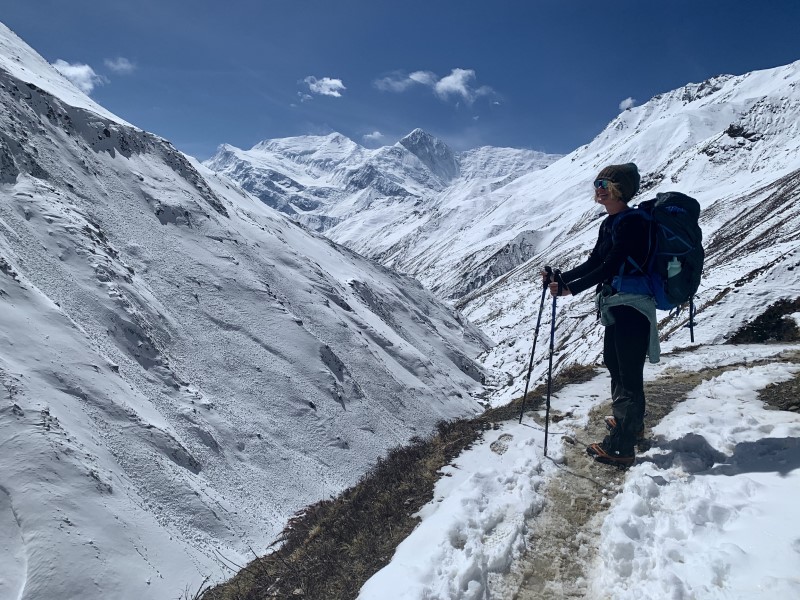
There’s nowhere on earth that makes you feel like you’re getting away from it all, like hiking on any section of the Annapurna Circuit. And it isn’t hard to understand why either, as, with swooping landscapes, stunning sweeping range views to occupy the eyes and cultural history to engage the mind, this is one of the most popular treks in Nepal, if not the planet! Awe, in the slack-jawed sense, is one fair response to the views, true, but there’s also so much you can do to make a trip whole, and ensure moments on trail truly live up to their promises. The following is your guide on how to get the most out of your Annapurna Circuit Trek, regardless of whether you have marathon legs and have pounded trails before, or are relatively new to trekking.
“Go slow, acclimatize well.
The most common error committed by Annapurna Circuit trekkers is to go too high, too early in the trek. So when we met again six weeks later in the lowland villages of the Annapurna Circuit, I was tender with myself as I trudged to the top of each crest and slumped behind a teahouse to catch my breath. ()The Annapurna Circuit is a trek where trekkers stay in teahouses along the trail, both on the approach to Thorong La Pass (17,769 feet) and the other side of the pass, and acclimatization makes all the difference in feeling good and having fun.
In those days, rather than grinding, allow yourself to recalibrate. You want to take rest days, and that’s especially true at somewhere you gained a lot of elevation, like Manang or Phedi. Spend those days resting a lot, drinking a lot of water, and being a lot more pleasant to yourself. And your frame will thank you whilst you climb to the higher elevations.
(And don’t forget, there’s one of these components as altitude sickness, and it can kill you.) In case you become lightheaded, nauseous, or have difficulty respiration, go to a decrease altitude as quickly as possible to rest. What may be done to avoid altitude illness?
Cultural Experience and Assimilation
There’s a bend in the land that calls for one more ascent, one more narrative, one more epic. This is the part of the Annapurna Circuit that you’re all familiar with. Source And imagine you spent a whole day in the Himalaya, advancing the whole people of the Himalaya, another group of dominating caste called Gurung, Tamang, Sherpa, and so on, who are meeting and crossing you. We had to come and spend time to learn about the area people, their way of life, and attempt to admire their traditions.
Annapurna Circuit Trek Prevent at the monasteries and gompas (Buddhist temples) along the course. Morris tells me it’s a gesture of goodwill, will I’m pretty sure most of the trekkers are going to do — and should have done — in reciprocation, donating a little to the monks, hanging their flag. The locals are excited to have you there, and there are two tea houses where you may start to get a taste of Nepalese food and lifestyle over dinner with other hikers. If you become lightheaded, nauseous, or have trouble respiratory, visit a decrease altitude as soon as possible to relax. A part of the Annapurna Circuit. And it isn’t hard to understand why either, as, with swooping landscapes, stunning sweeping range views to occupy the eyes and cultural history to engage the mind, this is one of the most popular treks in Nepal, if not the planet! Awe, in the slack-jawed sense, is one fair response to the views, true, but there’s also so much you can do to make a trip whole, and ensure moments on trail truly live up to their promises. The following is your guide on how to get the most out of your Annapurna Circuit Trek, regardless of whether you have marathon legs and have pounded trails before, or are relatively new to trekking.
“Go slow, acclimatize well.
The most common error committed by Annapurna Circuit trekkers is to go too high, too early in the trek. So when we met again six weeks later in the lowland villages of the Annapurna Circuit, I was tender with myself as I trudged to the top of each crest and slumped behind a teahouse to catch my breath. ()The Annapurna Circuit is a trek where trekkers stay in teahouses along the trail, both on the approach to Thorong La Pass (17,769 feet) and the other side of the pass, and acclimatization makes all the difference in feeling good and having fun.
In those days, rather than grinding, allow yourself to recalibrate. You want to take rest days, and that’s especially true at somewhere you gained a lot of elevation, like Manang or Phedi. Spend those days resting a lot, drinking a lot of water, and being a lot more pleasant to yourself.
Carry some water purification with you, like purification tablets or a filter, so you can enjoy the clean water on the trail with your CamelBak. There are water refilling stations in tea houses en route, but an extra purifier means more choices again.
The Good Stuff, If You Can Get It
With its towering mountains, thousands of rhododendron trees, and crystal clear brooks, you’d feel compelled not to take your camera with you. Annapurna Circuit is definitely full of so many photographic moments, but there is always the need to be ‘in the moment’ and see them with your own eyes too.
Yes, these picturesque-slash-friendly village-and-VistaVision vistas are there to be had — but also, let the now register. And let’s not forget to set the camera aside and savor the hike. There is a certain power in solitude like that, the sound of your boots hitting the trail, the smell of cool mountain air whipping past your ears, the sun’s warmth on your arms. And the heroes are those who do not die in the pictures.
Prepare for Changing Weather
And we all know anything about the Annapurna and its unpredictable weweatherespeciallyly as you start to climb upwards! The popular trek is known for its unpredictable weather even at peak trekking times in spring and autumn, and passes through the Sindhupalchok and Rasuwa districts of the Langtang. It would protect you from the sun and from the cold and the wet and the snow; it would hasten you on your way.
Pool the ProsIn order for you to have the best possible experience, you’ll need your kit to handle you in any range of conditions. It’s all about the layers — thin clothes for hot days and something thicker when cold (for nights at a higher elevation). And stuff a rainproof jacket in your bag for the showers — parts of the course can be damp, especially in spring.
And then there’s the weather, of course. And the weather too, it can be a factor as you’ll be up high in passes (or down in precipitation land). Then give yourself some wiggle room in your plans — an extra hour or two if the weather is especially variable that day.
Summary: Enjoy the Annapurna Circuit Trek in the end.
It’s a tough hike, it will push you and make you stronger, both physically and in the end will give you beauty like and terrains that you couldn’t even imagine, heritage and traditional culture could not even touch my photos, and a lot of feelings like you did something. To maximize the likelihood you will have a good time, you need to acclimate well, keep well-hydrated, respect other people’s culture, and be in tune with the weather. Allow yourself to take it in not just as a trekker who has sort of made it as a visitor in a beautiful country..
As you climb higher along the Annapurna MCircuit, you get closer to the mountains, their people, and to yourself. Drink it in, and the Annapurna Circuit will work on your spirit like nothing ever again.
 Travora